

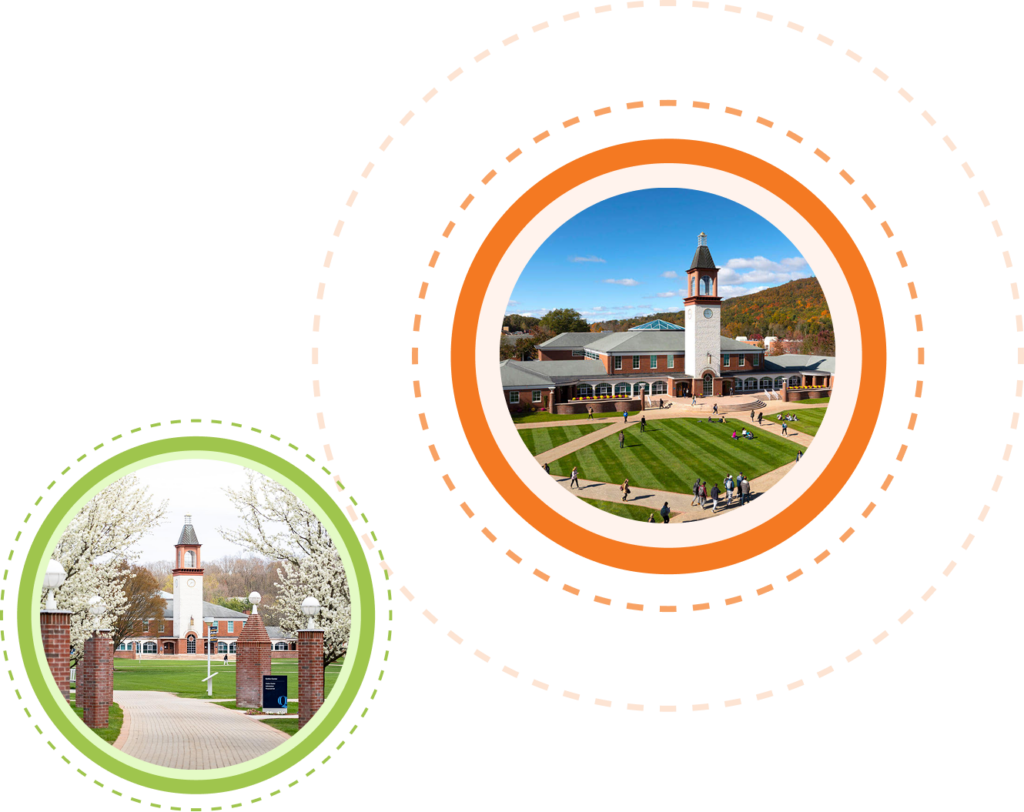

Quinnipiac University
Hamden, CT
Founded in 1929, Quinnipiac University is a private institution in Hamden, Connecticut, serving more than 9,700 students across undergraduate, graduate, law, and medical programs. Its commitment to experiential learning extends beyond the classroom and around the world through a diverse portfolio of semester-long study abroad programs, short-term faculty-led experiences, global internships, and other international opportunities.
The university’s Office of Global Engagement manages programs that range from traditional semester experiences to faculty-led trips and internships. It also supports specialized opportunities, including a summer program at Trinity College Dublin and an Irish minor that allows students to complete much of their coursework overseas.
For Mark Tortora, Director of Study Abroad, managing that variety requires giving students, faculty, and administrators a consistent way to find information, complete applications, access student records, and understand what is happening across the portfolio. For this reason, Terra Dotta has become the centralized foundation that keeps their expanding portfolio connected, compliant, and student-centered.
fewer public-facing website pages, reducing content to maintain
departments centralized in year one, with zero added headcount
access to emergency contacts, location data, and participation reporting

university-recognized, student-run organizations
undergraduate majors and 22 graduate programs
club sports teams
Division I sports teams
schools and 3 campuses
As Quinnipiac’s Office of Global Engagement managed an increasingly diverse portfolio, not every program was operating within the same system. The university’s New York City and Los Angeles internship programs, for example, were being managed outside the office’s centralized database. The School of Law’s summer program with Trinity College Dublin represented another opportunity to bring a separate program into the same environment.
To bring these decentralized units into the fold without overburdening internal staff, Quinnipiac enlisted Terra Dotta’s Dottan Desk team. Functioning as an extension of Quinnipiac’s staff, the Dottan Desk team stepped in to handle the technical heavy lifting: asking key questions about existing workflows, identifying operational bottlenecks, and building custom application processes directly within the platform. For the law program, the Dottan Desk team even collaborated with the university’s marketing team to establish streamlined pathways for external applicants.
The results of this collaboration were immediate and measurable. In its first cycle, the Dublin law program received 34 applications, with 14 students ultimately committing to the program. The New York City and Los Angeles internship programs also transitioned smoothly to the shared environment, resulting in 50 applications and 12 committed students through the new workflows.
The change also extended beyond administrative staff. Faculty leading programs can now log into Terra Dotta as back-end users to access program information, review application materials, and monitor rosters. This gives them a clear, shared source of information as they prepare to lead their experiences overseas.
Centralization wasn’t limited to application workflows and student records. Quinnipiac also partnered closely with the Dottan Desk team to rethink how prospective students, current applicants, parents, and faculty navigate the university’s public-facing study abroad website.
Over time, the site had accumulated 12 pages, including multiple overlapping resource portals—general, student, and parent—and dedicated FAQ pages for each. This complex structure created an excessive amount of content for staff to update and made it difficult for site visitors to quickly find relevant details.
To solve this, the Dottan Desk team conducted a thorough site audit and led interactive design sessions with Quinnipiac. Working from a starting mock-up built by Dottan Desk, the teams evaluated the user experience by asking a simple question: What is each visitor trying to accomplish?
Guiding Quinnipiac through strategic content decisions, the Dottan Desk team helped determine which information belonged on the public site versus inside the application portal. The team systematically consolidated overlapping resource pages and clarified navigation pathways based on user intent. This collaborative effort resulted in a 25% reduction in public-facing website pages. This reduction simplified the student journey, created a direct path to application, and drastically reduced ongoing content maintenance for Quinnipiac staff.
The office also surveys students who withdraw from applications. Their responses can reveal barriers such as cost or lack of interest in a particular location, helping inform decisions around scholarships, funding, and future program offerings. For Quinnipiac, the value is being able to use that data in different ways depending on the question at hand.
That data has become particularly valuable as Quinnipiac’s global programs have evolved in the years since COVID-19.
The university’s first post-pandemic cohort included just 15 students abroad. Today, participation across semester programs, short-term and faculty-led experiences, internships, and other opportunities has reached the 500-plus range. The university is careful not to attribute that growth to any single factor. Student interest, faculty advocacy, the broader climate around international travel, and families’ comfort with sending students abroad all play a role.
Semester participation, in particular, has not yet returned to pre-pandemic levels. Before COVID-19, Quinnipiac sent roughly 250 students abroad for semester programs across an academic year; today, that figure is closer to 150. That makes the office’s broader strategy especially important. Rather than assuming participation will simply return to previous levels, the team uses student feedback, program demand, and participation data to understand what students want and where barriers remain.
At the same time, a centralized platform gives students a more consistent place to discover programs and gives the office a clearer picture of how the portfolio is performing.



As Quinnipiac prepares to roll out AI-powered site tools and expand application options across additional academic units, the Office of Global Engagement remains focused on its core mission: delivering rich, transformative educational experiences for every student.
Partnering with Dottan Desk Enterprise has provided Quinnipiac with essential staff augmentation and domain expertise. Instead of spending months training internal staff or hiring additional FTEs to manage complex software setups, the Quinnipiac team can simply delegate technical challenges to Dottan Desk experts. This on-demand project model solves operational issues efficiently, eliminating administrative friction and freeing Quinnipiac’s small staff to focus on high-touch student advising, faculty training, and global strategy.
“Our work supports the entire Office of Global Engagement,” reflects Tortora. “Having a centralized, reliable system allows our team to work together seamlessly and furthers the important work we do to advance global education across the entire university.”