

Ohio Wesleyan University
Delaware, OH
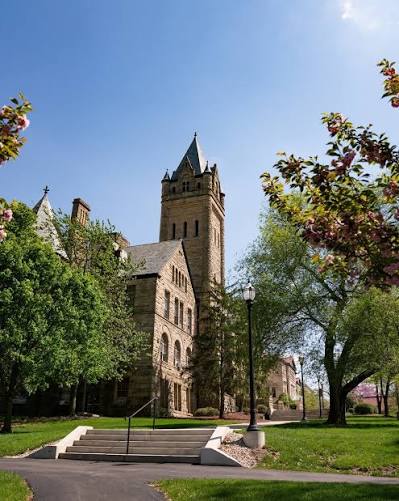
Founded in 1842, Ohio Wesleyan University (OWU) is a private liberal arts institution committed to helping students connect their education to meaningful experiences beyond the classroom. Through The OWU Connection, students engage in high-impact opportunities, including international education, independent research, community service learning, and internships.
For the team in International and Off-Campus Programs (IOCP), that mission creates both an opportunity and a responsibility. Global experiences are central to how OWU prepares students for what comes next.
Today, approximately 250 students participate in international experiences each year through semester programs, faculty-led travel courses, research opportunities, internships, and other global initiatives. For a team of four full-time staff members, supporting that level of engagement requires intentional planning, strong partnerships, and systems that can scale alongside growing participation. For Ohio Wesleyan, Terra Dotta has become an essential part of that foundation.
year-over-year growth in study abroad participation
expansion of faculty-led travel courses within a single academic year
eliminating manual student data entry and improving reporting accuracy
students participating in international experiences annually
student clubs, organizations, and activities
academic majors
varsity sports
When Lisa Ho, Director of IOCP, reflects on the evolution of global education at Ohio Wesleyan, one theme stands above the rest: access. Over the past several years, the university has worked to ensure that international experiences are available to all students, regardless of financial background or previous exposure to global travel.
That commitment is particularly important given the university’s student population. Nearly 40% of OWU students are Pell-eligible, and approximately 35% are first-generation college students. “Study abroad has historically been an area where some student populations have been underserved,” says Ho. “Our focus has been on making these experiences as accessible as possible. That includes cost, processes, and ensuring that students can successfully navigate the journey from interest to participation.”
Accessibility begins long before a student submits an application. Under the leadership of Assistant Director Hanna Burr, the office curates a focused catalog of programs aligned with both academic goals and financial realities. Programs are organized into cost-based tiers, allowing students to immediately understand how financial aid will apply and what additional expenses they may encounter. More than 100 programs fall within OWU’s most affordable category. Higher tiers clearly state add-on costs, allowing students to make informed decisions from the start.
Financial aid accompanies students in approved programs through OWU’s home-school tuition model. Additionally, a $20 million endowment for high-impact experiences funds Connection Grants that, in practice, cover most students’ flights entirely. The office also secured an IIE Passport Grant from the Institute of International Education to fund passports for 25 first-generation and Pell-eligible students, removing a barrier that often goes unaddressed.
“We want students to see opportunities that fit their academic interests and their budget from the beginning,” says Burr. “When students can quickly identify programs that are both exciting and realistic, it changes the conversation.”
The goal, as Ho describes it, is straightforward: if a student chooses to study abroad, the cost should be comparable to that of staying on campus. Flights, financial aid, and grants work together to make that possible for students across income levels.
That intentional approach is producing meaningful results. Study abroad participation increased 30% year over year, and first-generation students now participate at the same rate as the broader student population.
As participation expands, so does the complexity of managing global education programs. Ohio Wesleyan oversees university-run programs in Spain, Ireland, and Tanzania; consortium opportunities through the Great Lakes Colleges Association (GLCA); faculty-led travel courses; student-petitioned programs; and third-party provider programs across six continents. For the upcoming 2026–2027 academic year, faculty-led programs alone doubled, with approximately 120 students expected to participate.
Managing that breadth with a lean team requires thoughtful use of technology. Terra Dotta serves as the central hub for program discovery, application management, communication, and student tracking at every stage of the study abroad process.
Students begin by exploring opportunities through OWU’s customized program directory. From there, they move through a structured advising process that guides them from initial exploration to course approvals, pre-departure preparation, and final participation. Automated notifications and application workflows help students stay on track while reducing administrative follow-up.
OWU designed the advising experience around the platform itself. Phase one introduces students to the Terra Dotta search engine, walks them through the tiered cost structure, and sets expectations for the process. Phase two covers course equivalencies, residential notifications, and pre-departure logistics. “The search engine is really the starting point,” says Burr. “Students learn how to identify programs that fit their goals, understand the financial implications, and move through the process with clear expectations.”
Ohio Wesleyan’s relationship with Terra Dotta began in 2012, but the institution’s utilization of the platform has evolved significantly over time. In the early years, the system was used primarily for basic study abroad administration. As staffing structures changed and the office expanded its capacity, the team began exploring a broader range of functionality. Burr, who used the platform herself as an OWU student studying abroad in Spain, brought a practitioner’s perspective to that expansion when she joined the team.
Ho describes that evolution in three phases. Initially, Terra Dotta served as an extension of the office. “There were times when I simply handed projects to the Dottan Desk team because I didn’t have the bandwidth to do them myself,” says Ho. “It was almost like having another staff member on retainer.”
Over time, that relationship shifted toward knowledge transfer and skill development. “The next phase was learning,” Ho explains. “Instead of doing the work for us, Terra Dotta’s enablement team was teaching us how to do it ourselves.”
Today, the office operates from a position of ownership, evaluating every workflow through the lens of long-term sustainability and institutional value. Ho’s advice to peer institutions reflects that arc: use Dottan Desk to onboard new staff and get the foundational building blocks in place. Then invest in the Terra Dotta Learning Center as an ongoing resource. “Once you have the basics down, the Learning Center can function almost like a Dottan Desk subscription—just at scale and on your own timeline,” she says.
The Terra Dotta user community has also played a meaningful role. Connections with peer institutions, power users, and professional networks have helped OWU solve technical challenges, accelerate integrations, and discover new platform capabilities. The SIS-to-Terra Dotta integration, completed a few years ago, is one example: getting it done meant connecting OWU’s IT team with counterparts at peer institutions who had navigated the same process. “That community made the difference,” Ho says.
Before the integration, students manually entered academic and demographic information that was not automatically updated. Today, that data flows directly from OWU’s student information system, giving advisors current, accurate records from the moment a student begins exploring programs.
At Ohio Wesleyan, reporting has become a strategic tool. The office relies on Terra Dotta to support institutional reporting, demonstrate program impact, and provide leadership with visibility into participation trends.
During a period of staff transition, the office missed submitting the education abroad portion of the IIE Open Doors report for one academic year. When OWU’s provost came across a peer institution’s Top 40 Open Doors announcement and forwarded it, asking why OWU wasn’t on the list, the stakes were crystallized.
Participation data helps tell the story of what we’re accomplishing as an institution,” says Ho. “It matters to senior leadership. And having Terra Dotta in place means we can always generate that data accurately and on time.”
With consistent reporting now in place and participation numbers climbing, OWU is positioned to reach the Top 40 in Open Doors rankings among peer institutions in the next reporting cycle.
Terra Dotta also supports real-time decision-making in ways that go beyond annual reporting. At 1 a.m. the night before a group departure to Toulouse, France, Ho was managing a message from a student whose flight had been rescheduled. She needed the student’s itinerary immediately and, in that moment, recognized exactly what a centralized travel registry would mean for situations like this. That experience is driving the office’s current initiative to bring all university-affiliated travelers into Terra Dotta’s travel registry: one platform for itinerary data, risk management, and traveler support, available the moment it’s needed.
“In an age where data is critical to advocacy and demonstrating impact, we can’t do what we do without Terra Dotta,” Ho says.

While Ohio Wesleyan has significantly expanded its use of Terra Dotta, the team views its current implementation as only part of what’s possible.
With the travel registry expansion already underway, Burr is also building advising applications that will move pre-advising interactions out of spreadsheets and into Terra Dotta, creating a more complete picture of the student journey from first inquiry to program completion.
Application triggers represent another area of opportunity. By automating routine processes, such as conduct checks and approvals from campus partners, the office hopes to reduce manual work while improving consistency and accountability.
Ho frames the broader ambition clearly: “There’s the entry level: set up programs and applications and get them to work for you in the basic sense. And then there’s this deeper layer of functionality that literally does the work for you.”
When asked what they would share with colleagues at similar institutions, Ho and Burr return to a few consistent themes.
Start with the foundation. For smaller offices in particular, success comes from building a strong core (e.g., a program directory, application workflows, automated notifications) and expanding thoughtfully over time.
Think beyond application management. The most impactful use of Terra Dotta at OWU has been the decision to treat the platform as part of a broader strategy. Travel registry, SIS integration, advising workflows, and data reporting all reinforce each other. The more the platform captures, the more useful it becomes.
Get the best out of the Terra Dotta community. “Lean into the community around you,” Ho advises. “The field is filled with brilliant professionals who have already solved the exact workflow bottlenecks you’re currently facing, and they’re incredibly eager to share their blueprints.”
For Ohio Wesleyan, the results speak to what’s possible when technology, intentional design, and institutional commitment work together. Participation is growing. First-generation students are going abroad at the same rate as their peers. And the data infrastructure is in place to tell that story.