Missouri University of Science and Technology (Missouri S&T)
Rolla, MO
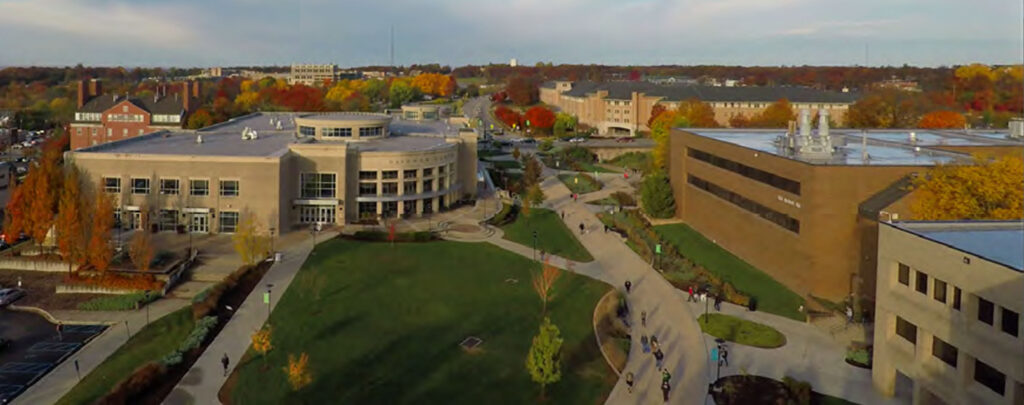
Founded in 1870, Missouri University of Science and Technology (Missouri S&T) is a public research university in Rolla, Missouri, and a member of the University of Missouri System. Known for its strength in engineering, computer science, and STEM education, the university serves more than 7,000 students across undergraduate and graduate programs.
International education is an important part of Missouri S&T’s campus community. The university’s International Student and Scholar Services (ISSS) office supports approximately 1,500–1,600 international students, many of whom are graduate students involved in research and assistantship programs.
For James Slone, Director of International Student and Scholar Services, supporting this population requires the ability to understand student data, respond quickly to changing circumstances, and provide university leaders with the insights they need to make informed decisions. When Missouri S&T adopted Terra Dotta ISSS Student in 2024, the office quickly realized the platform could support far more than digitizing paper-based workflows. By redesigning processes, connecting systems, and expanding its use of reporting and automation, the team built a more connected, efficient, and data-informed approach to international student services.
paperless transition across all internal ISSS administrative workflows
time saved on manual academic-level reporting
time saved on dependent processing and I-20 preparation
colleges
departments
intercollegiate varsity sports
club and intramural sports
student organizations
Before implementing Terra Dotta, Missouri S&T’s ISSS office relied heavily on paper forms, email exchanges, spreadsheets, and manual data entry. Student requests often moved between multiple staff members before reaching the right person, creating unnecessary delays and confusion.
“We were all paper forms, we were all emails, and there was a lot of back-and-forth when students weren’t completing a paper form or when forms were being sent to multiple people who didn’t need them,” says Slone.
The transition to Terra Dotta allowed the office to rethink those workflows entirely. Today, nearly every ISSS process has moved into a digital environment, with only one remaining paper process due to a federal requirement from the Social Security Administration. “We got rid of every physical paper process that we could because of adopting Terra Dotta,” Slone explains.
Instead of simply replacing paper with digital forms, the office eliminated manual work across document collection, reporting, communications, and record management, creating more time for advisors to focus on supporting students rather than managing administrative tasks.
One of the most significant workflow improvements came from connecting information across Missouri S&T’s systems. Before Terra Dotta, dependent information for international students required extensive manual entry into PeopleSoft, the university’s student information system (SIS). Every detail had to be entered accurately before information could be sent through SEVIS to generate an I-20. “Every birth date, every name, every detail down to the city of birth had to be accurate,” says Slone. “If there was a change, you had to go back into PeopleSoft and batch it again the next day.”
With Terra Dotta, Missouri S&T moved dependent management into a more connected workflow, allowing staff to manage dependent information directly through Terra Dotta while reducing processing time from approximately 30–35 minutes per student to about 10 minutes.
The university also expanded automation beyond the ISSS office by integrating Terra Dotta with its admissions platform, Slate, and its SIS. Information such as SEVIS IDs, I-20 issuance dates, visa status, and other student milestones now flows automatically between systems, eliminating duplicate data entry while ensuring admissions, ISSS, and university leadership all have access to consistent information.
The same connected approach transformed reporting. Previously, staff compared data manually across multiple systems to verify accuracy before preparing reports. “One report usually took a full eight-hour day to complete, and now we can do it within 20 minutes,” Slone says.
For Missouri S&T, Terra Dotta’s reporting capabilities quickly became one of the platform’s greatest strengths.
The value became especially clear during periods of uncertainty, including visa processing pauses and international travel restrictions. Instead of manually filtering large SEVIS exports, the ISSS team could immediately identify affected student populations and communicate with them. “Analytics was a savior, especially whenever we had students who were planning to renew their visas while they were already abroad,” Slone says. “We were able to immediately pull a list of students who were impacted and let them know what was happening.”
The same reporting capabilities also helped answer questions from across campus. Academic departments needed visibility into student travel that could affect research projects, while university leadership sought enrollment trends, visa activity, and graduate student projections to support planning and budgeting.
Rather than spending hours compiling information, the ISSS office could quickly deliver reliable data that helped departments make informed decisions.
One early example involved the I-901 SEVIS fee, which students must pay after receiving their I-20 before completing the visa process. Instead of manually tracking students who still needed to complete this step, the ISSS team created an analytics report connected to an automated email reminder. “That increased the number of students we saw completing the I-901 fee payment,” says Slone.
The team applied a similar approach to Curricular Practical Training (CPT). By creating reports based on CPT employer end dates, the office could automatically remind students when their authorization period was ending and prompt them to take the next steps. These workflows replaced spreadsheet tracking while helping students stay on top of important requirements.
As Missouri S&T explored Terra Dotta Dashboards, the focus extended beyond operational reporting to executive decision-making.
Working closely with Terra Dotta’s product team, the university shared how campus leaders evaluated international enrollment, financial projections, and student trends. Those conversations helped shape dashboard enhancements, including total counts, additional customization options, and year-over-year comparisons.
One thing our leadership team cares about is what it was last year, not what it was last month,” says Slone. Although many executive dashboard capabilities will come with ISSS Next Gen, the early collaboration allowed Missouri S&T to prepare its reporting strategy in advance.
Once Next Gen is fully deployed, university leaders will be able to access real-time dashboards showing enrollment trends, anticipated graduate student numbers, tuition forecasting, and other operational metrics without relying on manually prepared reports.
For Slone, implementation was only the beginning. “When you’re going through implementation, you don’t always get every possible thing you can do within Terra Dotta.”
Instead of treating implementation as the finish line, the ISSS team continued refining workflows by meeting regularly with Terra Dotta experts, attending the annual Terra Dotta Conference, and learning from peer institutions.
One example involved creating a custom Notes field within Terra Dotta. Advisors can now record operational information—such as why an I-20 has not yet been issued or where a student is in the OPT or STEM OPT process—and include those notes in reports. Rather than relying on individual staff knowledge or separate spreadsheets, the entire team has real-time visibility into student progress.
“We think that we find new things every day with Terra Dotta that we can do,” says Slone.
These improvements also enabled the office to build additional custom fields, including I-20 creation dates, check-in dates, admission types, and other operational milestones that now support reporting, automation, and year-over-year analysis.
Looking back on the implementation, Slone believes one of the most important decisions was involving campus partners from the beginning. “When we implemented ISSS Student, we had a dedicated person with IT in every meeting,” Slone notes.
Having IT staff participate ensured data moved correctly between Terra Dotta, the SIS, admissions systems, and other campus technologies. Rather than updating multiple platforms independently, information now flows automatically across systems, improving both accuracy and efficiency.
Slone also encourages institutions to continue learning after implementation by taking advantage of Terra Dotta’s user community. “The conference is a lot of fun,” he says. “You learn what other institutions are doing, they learn from you, and together you find better ways to solve the same problems.“
By connecting campus systems, automating communications, expanding reporting capabilities, and continually refining workflows, the ISSS office has shifted staff time away from administrative work and toward advising students, supporting campus leaders, and improving services.
“Terra Dotta has helped us a lot. We’ve been able to really balance our time well, and we’re thankful to have ISSS Student because it has been such a time saver,” Slone emphasizes.
As Missouri S&T continues preparing for ISSS Next Gen, the university is building on a foundation of connected data, continuous improvement, and informed decision-making, ensuring advisors, students, and university leadership all have access to the information they need when they need it.