


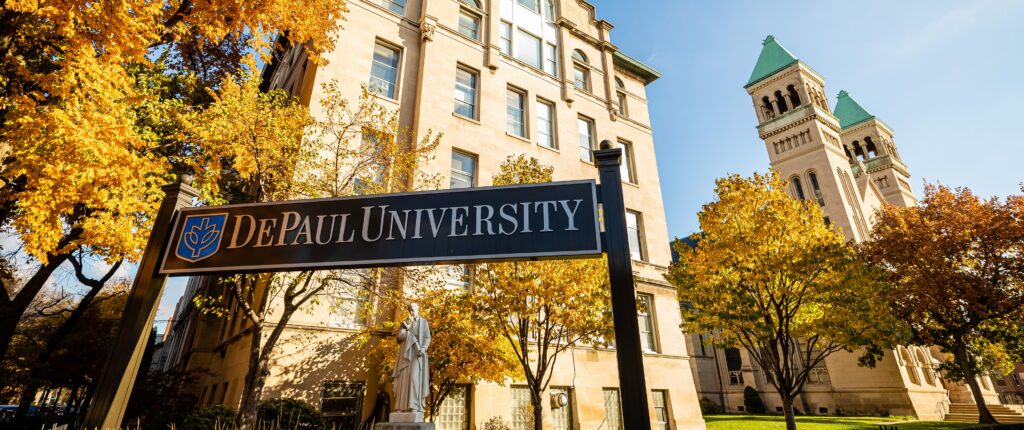
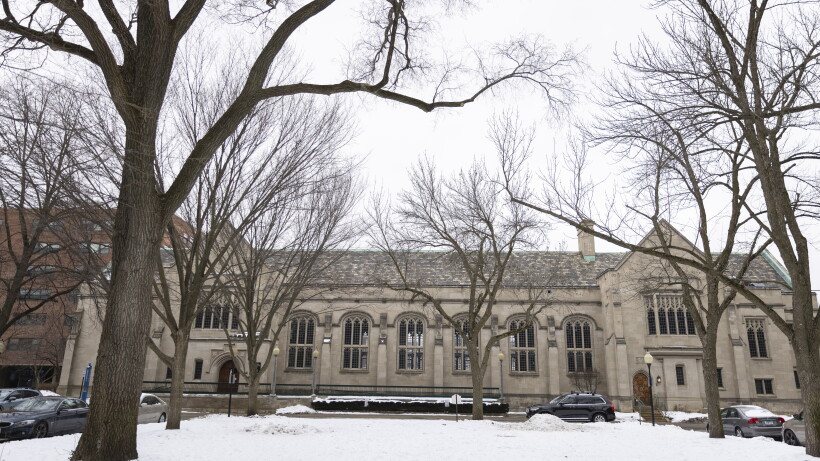
DePaul University
Chicago, IL
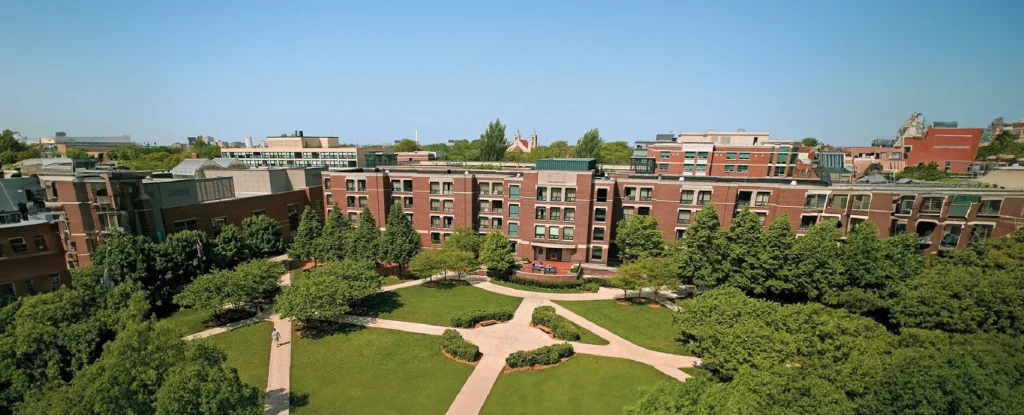
For more than a century, DePaul University has pursued a mission rooted in access. As the nation’s largest Catholic university, DePaul serves more than 21,000 students across its Chicago campuses, with a longstanding commitment to supporting first-generation students and those from historically underserved communities.
That commitment extends far beyond the classroom. Within the Office of Global Engagement, study abroad leaders continually examine ways to make international experiences more accessible, equitable, and impactful for every student.
For Alma Sandoval Tzontchev, Assistant Director of Advising & Partnerships, that mission is deeply personal. A first-generation college student and DePaul study abroad alumna herself, Sandoval Tzontchev began her journey in the office as a student worker. Over the next 15 years, she advanced through advising and leadership roles while becoming one of the university’s primary Terra Dotta administrators and strategic technology champions.
Throughout that time, one question consistently guided the team’s work: how could studying abroad become more accessible for every student who wanted to go?
annual study abroad scholarship funding fully distributed
students studying abroad annually, successfully reclaiming near-peak enrollment
elimination of legacy administrative barriers for first-generation students
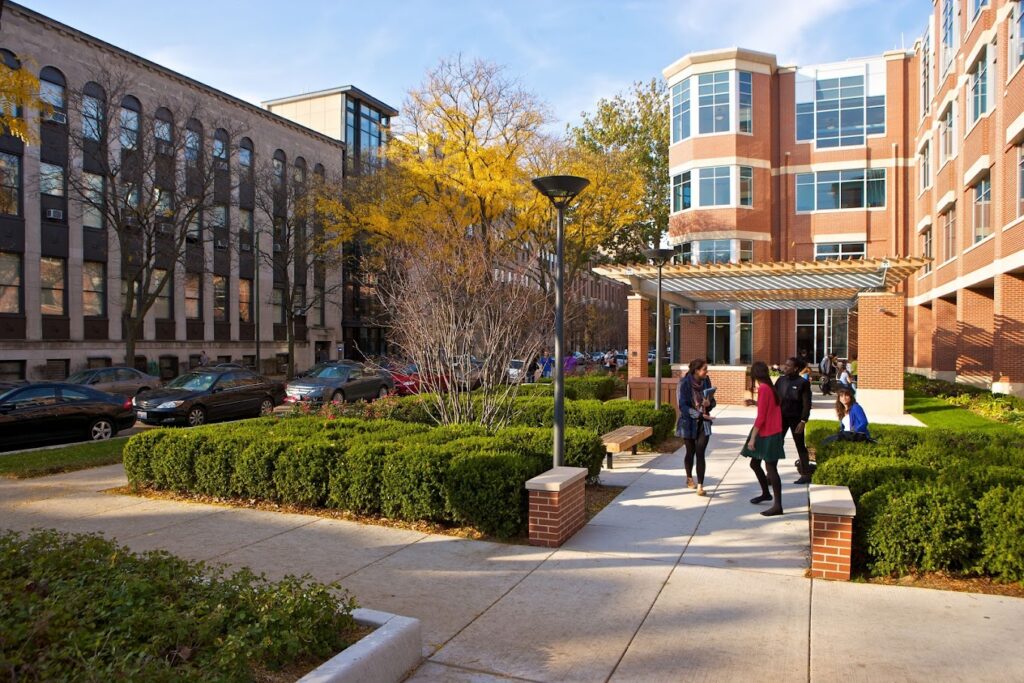
student groups
undergraduate and graduate degree programs
community partner organizations
colleges and schools
When Sandoval Tzontchev began overseeing DePaul’s Terra Dotta environment, she inherited a system that reflected years of growth and contributions from multiple administrators.
“There were a lot of people who had managed the system over time,” says Sandoval Tzontchev. “When I first attended Terra Dotta University and saw how other institutions were using the platform, it was a real eye-opening moment. We realized there were opportunities to structure things differently and create a much more streamlined experience.”
Sandoval Tzontchev came back and began a sustained, multi-year effort to optimize the system, retiring unused process elements, standardizing configurations, and rebuilding workflows with a clearer purpose. The team also evaluated every process through the lens of student access, asking not just whether something worked, but whether it was inadvertently making study abroad harder to pursue.
At the time, many workflows still relied on paper forms, manual approvals, and separate application experiences that varied by program. Rather than making incremental adjustments, the team consolidated multiple program-specific applications into a single, centralized process built within its Terra Dotta solution. They also reevaluated longstanding requirements that didn’t impact student outcomes.
Recommendation letters, for example, had historically been part of the application, but after reviewing admissions practices across programs, the office recognized that letters rarely influenced selection decisions on either the term-long or faculty-led side. More importantly, they could delay a student’s application from being considered complete through no fault of their own. Removing that requirement simplified the experience without sacrificing the information the team actually needed.
For DePaul, reducing barriers wasn’t a one-time initiative. It became an ongoing philosophy that continues to shape operational decisions today.
That philosophy grew more deliberate when the study abroad office launched a deeper examination of participation among first-generation students. Through the office’s Diversity Committee, staff conducted research to understand why some first-generation students successfully participated while many others did not. The findings confirmed what the team had long suspected: financial uncertainty and complex processes were consistently discouraging students from pursuing the opportunity.
The scholarship process was a clear example. Students had historically been required to submit a separate scholarship application. The result was predictable: funds regularly went unawarded because not enough students applied, even when the money was available. When the team interviewed first-generation alums who had studied abroad, many said they hadn’t applied for awards simply because the process felt too intimidating.
The solution was to remove the application entirely. Today, any student who applies to a program by the original deadline is automatically considered for a DePaul study abroad scholarship. Terra Dotta application tags track each student’s scholarship status and trigger automated communications at every stage, notifying students when they’ve been awarded, alerting the scholarship coordinator when an awarded student withdraws so funds can be redirected, and keeping the process moving without constant manual oversight. The office now distributes its full annual scholarship allocation of approximately $500,000, with essentially none left unspent. And students know whether they have an award before committing to a program, giving them the financial clarity to make a confident decision.
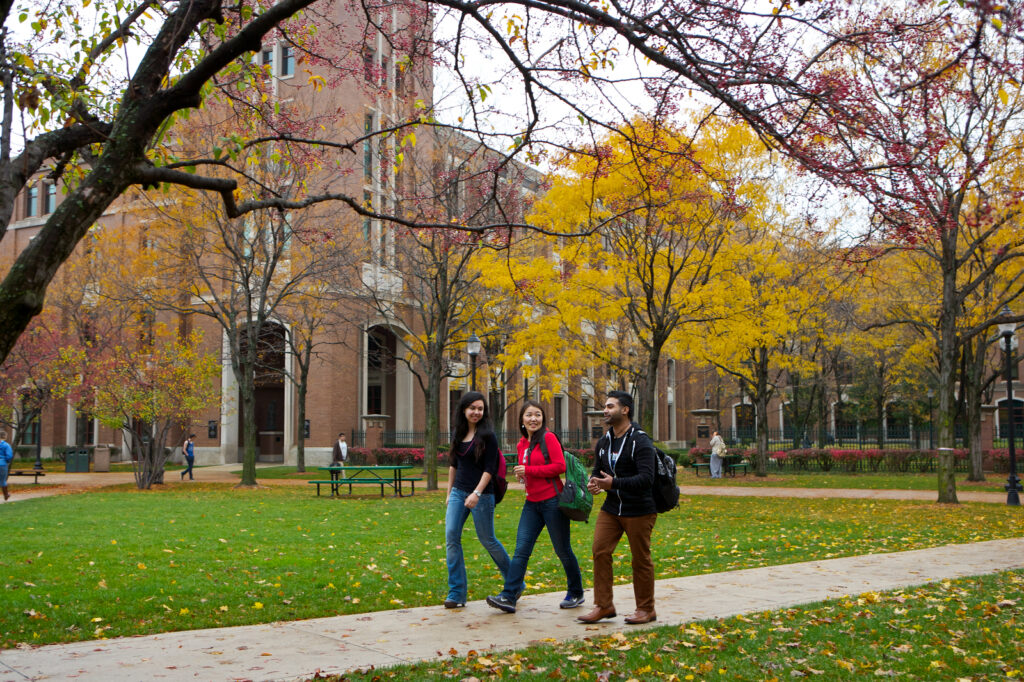
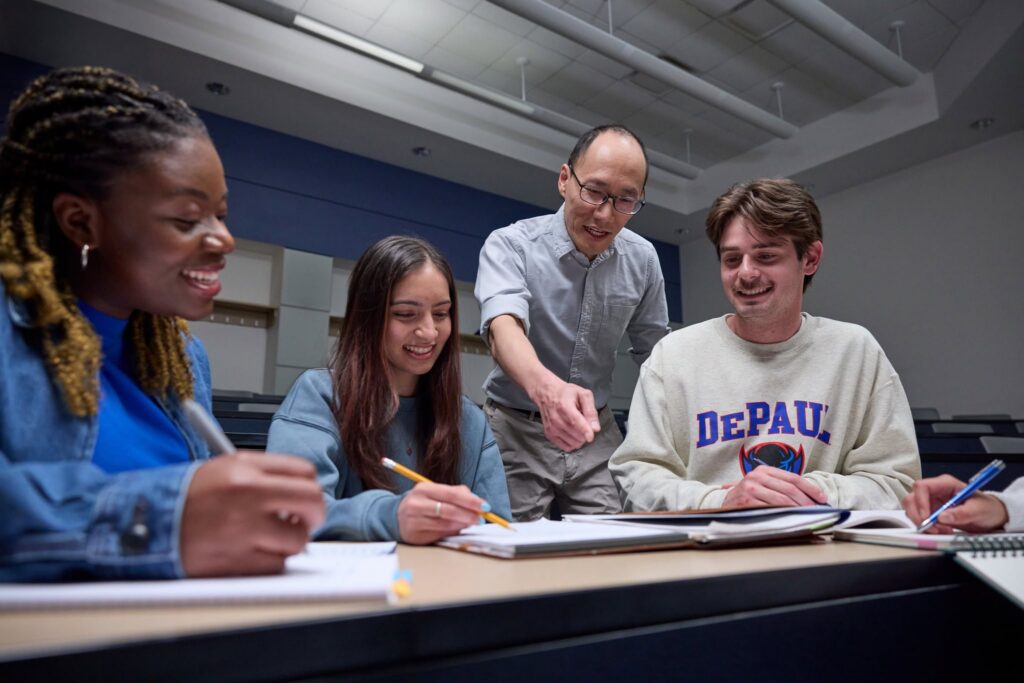
That same commitment to access shaped the launch of DePaul’s Identities Abroad programs — one of the office’s most meaningful achievements in recent years. These short-term, faculty-led programs are built around themes of identity and are designed to create clear pathways for first-generation students, students of color, and students with significant financial need. Every admitted student receives guaranteed funding.
What makes Identities Abroad structurally distinctive is its curricular foundation. Every DePaul undergraduate is required to complete a course on race, power, and resistance. The office deliberately designed the Identities Abroad programs to fulfill that requirement, allowing students to pursue international study while simultaneously completing a core academic obligation. The programs are open to all students, but they were built with the students most likely to encounter barriers firmly in mind.
The result? Fewer manual tasks and greater visibility and consistency across the student journey. “Terra Dotta helps us know exactly when action is needed,” says Sandoval Tzontchev. “Rather than constantly checking processes manually, we’re able to focus our attention where it matters most.”
DePaul is also expanding its use of analytics. Academic probation monitoring, previously managed through query watches, now delivers richer context through automated reporting. Staff can see GPA data alongside student records without conducting separate searches.
The team is also preparing to automate post-program welcome-back communications through analytics-driven workflows, replacing calendar reminders with system-triggered messages. “We realized there were several communications that happen at the same point every year,” says Sandoval Tzontchev. “Instead of relying on calendar reminders, we’re now exploring how to automate those touchpoints and create a more consistent experience for students.”
On the faculty-led side, the office has built a clean, centralized proposal and submission process inside Terra Dotta. Each of DePaul’s colleges has its own study abroad committee, and any faculty member who wants to propose a program submits their proposal through a dedicated program type configured by the team within the platform. Programs are built out by the college, proposals are submitted through the system, and the office routes them to the appropriate committee for review.
It’s a workflow that has run reliably long enough that, as Sandoval Tzontchev notes with some satisfaction, no one is complaining, which in higher education is often the best a well-designed process can hope for.
One of DePaul’s most complex recent initiatives was the transition to deployment rules. This project started with a comprehensive audit of every process element in the system and unfolded over multiple years.
“This was really a multi-year project,” says Sandoval Tzontchev. “We spent significant time identifying what was actively being used, what could be retired, and what needed to be rebuilt.” The cleanup phase came first. Setting up deployment rules and any new supporting configurations came after. The sequencing mattered as there was no point building on an untidy foundation.
Managing the human side of that transition turned out to be just as important as the technical work. Rather than assigning configuration tasks and hoping staff would find time to complete them independently, Sandoval Tzontchev organized dedicated work sessions where team members could build workflows together. “When people are busy, it’s easy for projects to remain on the to-do list. We found that setting aside dedicated time to work through changes together made a huge difference,” says Sandoval Tzontchev.
The project also hit an unexpected complication: Sandoval Tzontchev went on leave partway through. That’s where Terra Dotta’s Dottan Desk, the team’s hands-on training service, stepped in and kept the project moving. Structured training sessions helped maintain momentum, ensured that staff continued to progress, and made the process genuinely engaging. “The training sessions were practical and fun, and my team loved them,” says Sandoval Tzontchev. “That support saved a lot of time for me.”

DePaul’s study abroad story, like those of many institutions, was shaped by COVID. Before the pandemic, the office regularly sent approximately 1,200 students abroad each year. The disruption was significant, but the university’s leadership remained supportive throughout: students could go abroad, take courses online, or blend both approaches, and the office never fully stopped operations. Participation has steadily recovered, reaching roughly 1,100 students annually as the team continues evaluating sustainable growth strategies.
But recovery hasn’t been without constraints. A lost staff position has meant caps on the number of programs each college can propose and limits on program enrollment. Growing participation in the way the office once did isn’t straightforwardly possible right now. Rather than treat that as a fixed ceiling, the team is thinking strategically, examining program size and what recovery can realistically look like.
Technology won’t solve staffing challenges on its own. But every hour not spent on manual scholarship tracking, eligibility screening, or repetitive communications is an hour available for the advising and student engagement work.
Sandoval Tzontchev’s attention over the coming months is on Site Builder’s new program search experience — a redesigned interface with intuitive left-hand filters that will automatically surface programs currently accepting applications. The current process requires the team to toggle a parameter each cycle manually. The new search will read the system directly, keeping the student-facing view accurate without additional effort. It’s a targeted improvement with a meaningful ripple effect on how students discover and evaluate their options.
Sandoval Tzontchev is also closely monitoring the unified Admin Console rollout and plans to test it herself before enabling it for the broader team. And as the university transitions its main website to a new platform, she’s keeping a close eye on what the shift means for expanded adoption of Site Builder beyond the program search page.
Underlying all of it is a 15-year partnership that has matured alongside her career. What stands out to Sandoval Tzontchev now is how the nature of collaboration has shifted: more regular client touchpoints, more involvement in product direction before features launch rather than after, and a feedback loop that feels real. “I feel like my feedback is actually being incorporated into what the product looks like, and that’s really exciting.”